

If your pup is constantly scratching, licking their paws, or dealing with seasonal sniffles, you might be wondering, “how much Zyrtec can I give my dog?” Zyrtec, known by its generic name cetirizine hydrochloride, is a popular second-generation antihistamine that many veterinarians recommend for canine allergies.
Unlike Benadryl, Zyrtec for dogs is often preferred because it tends to be less sedating. However, because this is an “off-label” use for animals, getting the Zyrtec dosage for dogs right is critical for their safety.
Zyrtec Dosage for Dogs by Weight
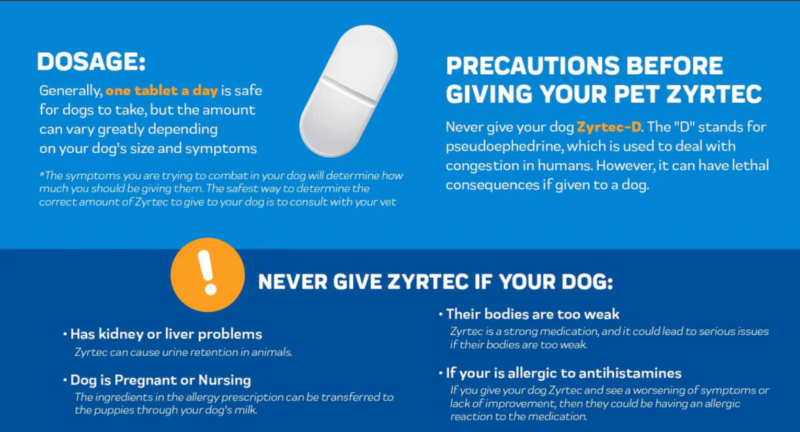
The standard veterinary recommendation for cetirizine for dogs is typically 0.5 mg per pound of body weight, administered once every 24 hours. Some veterinarians may suggest a twice-daily dose for severe symptoms, but you should never increase the frequency without professional advice.
Dog Zyrtec Dosage Chart
| Dog Weight (lbs) | Recommended Dose (mg) | Tablet Fraction (10mg Pill) |
| 5 – 10 lbs | 2.5 mg | 1/4 tablet |
| 11 – 25 lbs | 5 mg | 1/2 tablet |
| 26 – 50 lbs | 10 mg | 1 full tablet |
| 51 – 75 lbs | 15 mg | 1.5 tablets |
| Over 75 lbs | 20 mg | 2 full tablets |
Pro Tip: Most human Zyrtec tablets come in 10mg doses. If you have a small dog, using a pill cutter is the most accurate way to ensure you aren’t overdosing your pet.
Critical Warning: Never Use Zyrtec-D
When searching for how much Zyrtec can I give my dog, the most important rule is to check the packaging. Zyrtec-D is toxic to dogs.
The “D” stands for pseudoephedrine, a decongestant that is highly dangerous for canines. Ingesting even a small amount of pseudoephedrine can cause:
- Dangerously high blood pressure.
- Elevated heart rate (tachycardia).
- Seizures or tremors.
- Hyperactivity and agitation.
Always ensure the only active ingredient is Cetirizine Hydrochloride.
Common Side Effects of Cetirizine in Dogs
While Zyrtec is safe for dogs in most cases, some pets may experience mild reactions. Keep an eye out for these symptoms after the first dose:
- Drowsiness: Though less common than with Benadryl, some dogs still get sleepy.
- Excessive Salivation: You might notice your dog drooling more than usual.
- Vomiting or Diarrhea: Some dogs have sensitive stomachs and may experience GI upset.
- Urine Retention: This is rare but can be a concern for dogs with existing kidney issues.
When to Avoid Giving Your Dog Zyrtec
Before you reach for the medicine cabinet, consider your dog’s health history. You should consult a vet before giving antihistamines for dogs if your pet has:
- Kidney or Liver Disease: These organs process the medication; if they aren’t working well, the drug can build up to toxic levels.
- Seizure Disorders: Antihistamines can occasionally lower the seizure threshold.
- Pregnancy or Nursing: There is limited research on the effects of cetirizine on developing puppies.
- Glaucoma: Antihistamines can sometimes increase eye pressure.
FAQ: Frequently Asked Questions
How long does it take for Zyrtec to work in dogs?
Most owners see an improvement in itching or sneezing within 1 to 2 hours after administration.
Can I give my dog Zyrtec every day?
Yes, for seasonal allergies, many vets approve daily use. However, it is best used for short-term “flares.” If your dog needs it year-round, discuss long-term allergy management like Apoquel or Cytopoint with your vet.
Does Zyrtec contain xylitol?
Some dissolvable or chewable Zyrtec tablets may contain xylitol, an artificial sweetener that is deadly to dogs. Always stick to plain, swallowable tablets.
Final Thoughts for Pet Parents
Knowing how much Zyrtec to give a dog can provide your furry friend with much-needed relief from environmental allergens like pollen, dust, and mold. By following the weight-based chart and avoiding toxic additives like pseudoephedrine or xylitol, you can safely manage mild allergy symptoms at home.